Confirm site safety and priorities
We coordinate with the authorized site contact, identify affected operations and critical spaces, and review immediate hazards such as electricity, contaminated water, weakened materials, or restricted access.
 Request service →
Commercial restoration services
A water loss can spread through walls, flooring, inventory, and occupied areas quickly. We organize extraction, structural drying, documentation, and repairs around the needs of your facility.
Commercial response capabilities
We adjust the scope, work zones, equipment, access, and communication plan to the conditions at the facility. The goal is to control additional damage, keep decision-makers informed, and move the property toward safe repairs.
Our commercial process
Commercial water restoration requires more than removing visible water. Our process follows the moisture into affected materials, creates a documented drying plan, and prepares the property for complete repairs.
We coordinate with the authorized site contact, identify affected operations and critical spaces, and review immediate hazards such as electricity, contaminated water, weakened materials, or restricted access.
When it is safe and within the project scope, the source of the loss is shut off or isolated. Plumbing, roofing, utility, or specialty professionals may be needed before restoration work can proceed.
We evaluate visible damage, trace how water moved through the property, take moisture readings, and document affected flooring, walls, ceilings, contents, and structural materials.
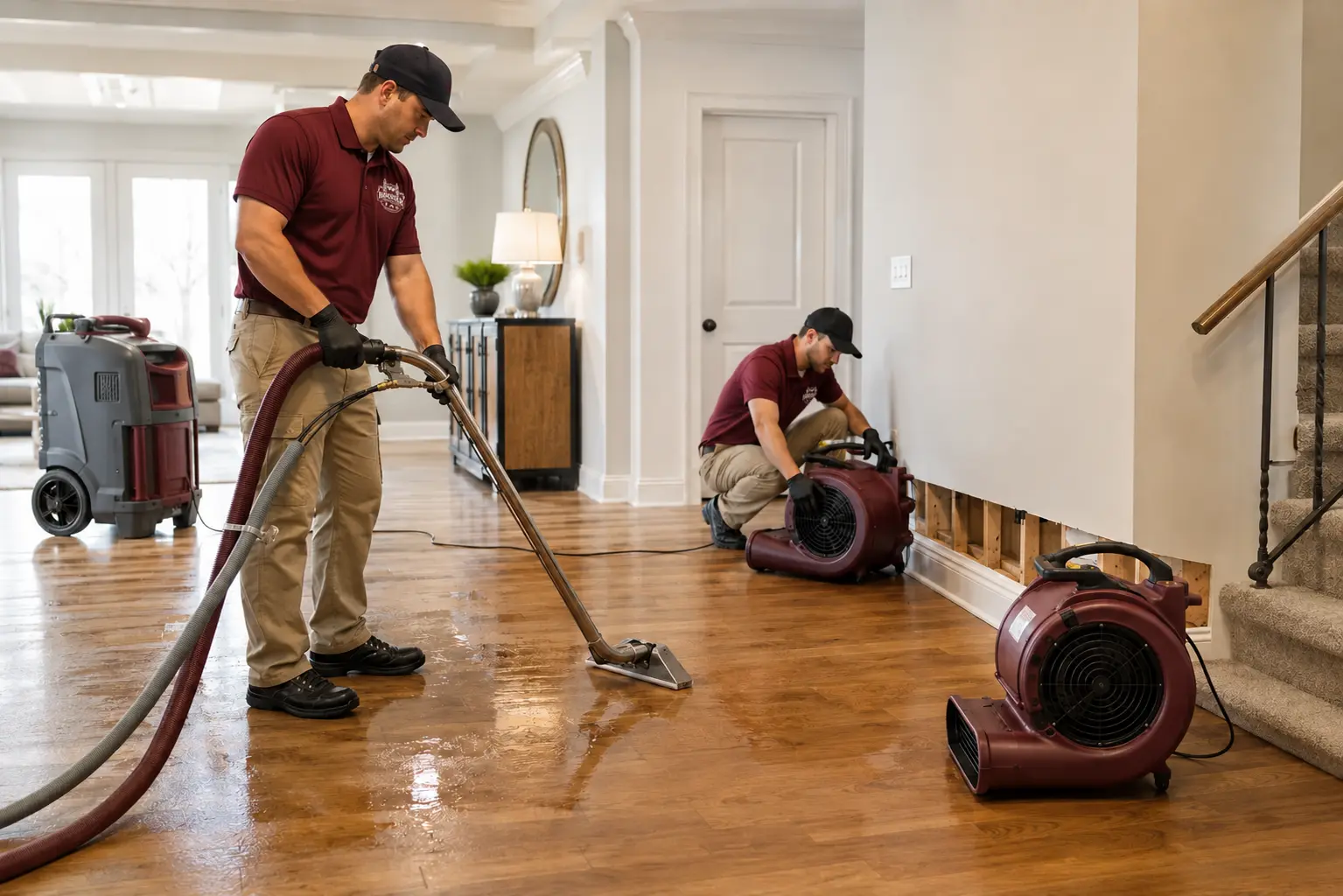
Professional extraction equipment is used to remove accessible standing water. Faster removal helps reduce absorption, secondary damage, and the amount of time required for structural drying.
Inventory, equipment, furnishings, and unaffected finishes are protected or relocated as appropriate. Containment, floor protection, and planned access routes help keep the work organized around facility operations.
Damaged materials that cannot be dried or safely cleaned may be removed in a controlled manner. The decision depends on the material, saturation, water category, duration of exposure, and project requirements.
Commercial air movers, dehumidifiers, and other drying equipment are positioned according to the affected materials and building conditions. Equipment placement may be adjusted as drying progresses.
Moisture conditions and equipment performance are monitored until the drying goals are reached. Affected areas are cleaned or sanitized as appropriate, and useful project records are maintained for stakeholders.
After mitigation is complete, we coordinate drywall, flooring, insulation, paint, trim, cabinetry, and other repairs. Work may be phased around access, tenants, customers, or production needs.
Water conditions determine the scope. Water from sewage, groundwater, or other contaminated sources may require additional containment, protective equipment, material removal, and specialized cleaning procedures.
Commercial coordination
We coordinate with the authorized property, operations, and claims contacts, explain important changes, and organize the transition from mitigation into reconstruction. For active damage, call (812) 230-3221.