◆Emergency safety review
After the fire department releases the property for entry, we review immediate hazards, damaged utilities, unstable materials, and access conditions. Safety comes first, and no one should enter a fire-damaged structure until it has been cleared by the appropriate authorities.
◆Secure and stabilize the property
Open windows, doors, roof areas, and other exposed sections may be boarded, tarped, or temporarily protected. We identify areas requiring structural stabilization and take practical steps to limit weather intrusion, unauthorized access, and additional damage.
◆Inspect and document the damage
We evaluate fire, smoke, soot, odor, and firefighting-water damage throughout the property. Photos, affected materials, contents conditions, and the recommended restoration scope are documented to support project planning and insurance communication.
◆Remove water and dry the structure
Water used to extinguish the fire can spread into flooring, walls, ceilings, and insulation. Standing water is removed, affected areas are evaluated, and professional drying equipment may be installed and monitored to reduce the risk of additional damage.
◆Protect and evaluate contents
Furniture, electronics, clothing, documents, and personal belongings are evaluated for restoration potential. Items may be protected in place, inventoried, packed out for specialized cleaning, or documented when they cannot be restored.
◆Remove soot and smoke residue
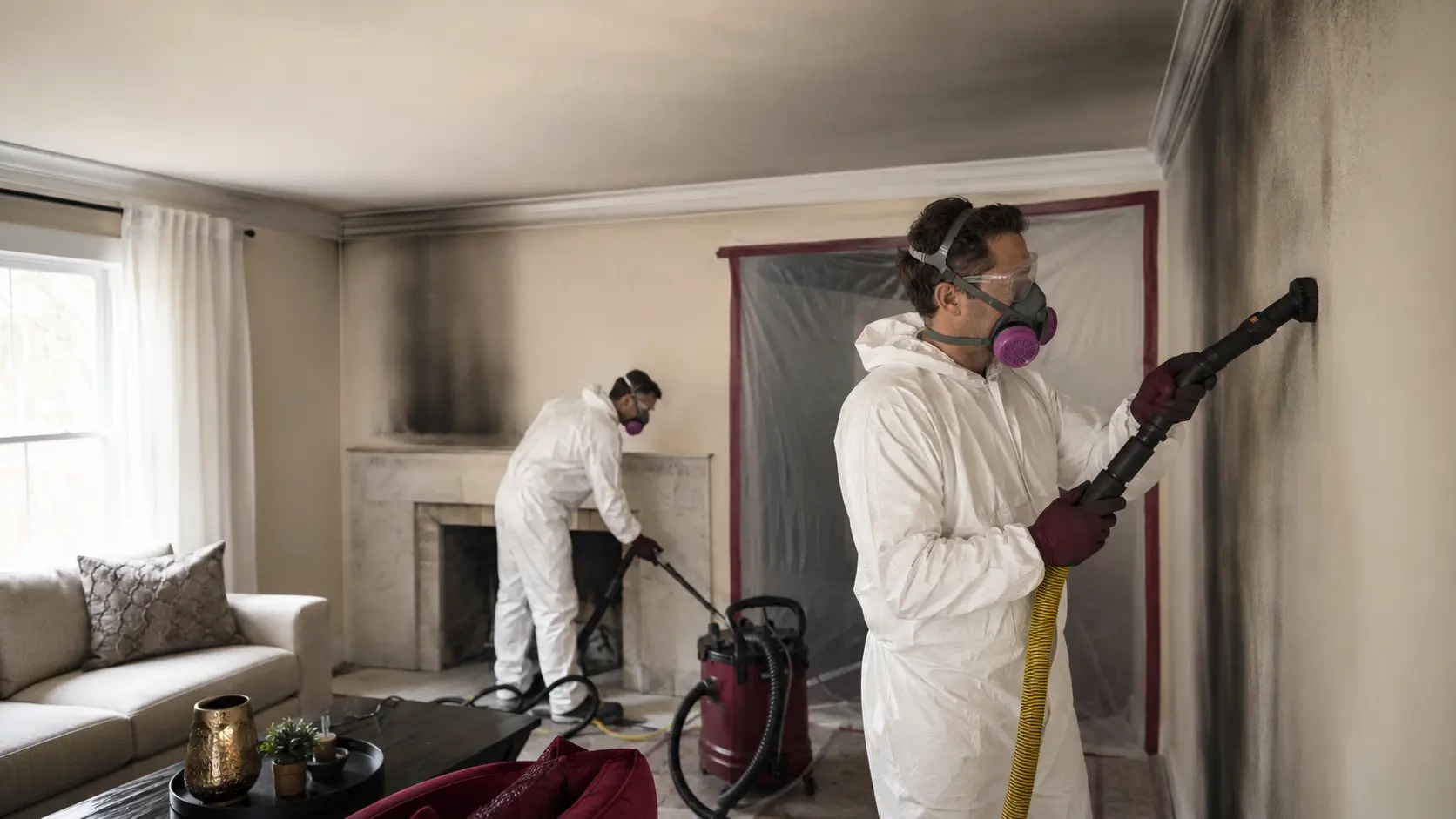
Different fires create different residues, so cleaning methods are selected for the affected material and type of soot. We carefully remove loose particles and clean ceilings, walls, structural components, fixtures, and salvageable surfaces to prevent residue from spreading or causing further damage.
◆Treat smoke odors
Odor treatment begins with removing damaged materials and cleaning the source of the contamination. Air filtration, detailed surface cleaning, deodorization products, and specialized odor-control methods may then be used based on the property conditions.
◆Clean and prepare for repairs
Once soot, debris, and odors have been addressed, affected areas receive detailed cleaning. Remaining materials are evaluated, the completed mitigation work is reviewed, and the property is prepared for the repair phase.
◆Reconstruct and complete the property
Hoosier Restorations can coordinate drywall, insulation, flooring, paint, trim, cabinetry, fixtures, and other repairs. A final walkthrough confirms the completed work and provides one clear path from emergency response through reconstruction.