Property assessment
We inspect the affected area, look for visible mold growth, evaluate surrounding materials, and use moisture-detection equipment to help determine the extent of the problem.
 Request service →
Restoration services
Successful mold remediation requires more than surface cleaning. We help isolate the affected area, remove impacted materials safely, clean remaining surfaces, and address the moisture conditions that allowed growth.
What the service includes
We tailor the work to the conditions found at your property. The first priority is protecting people and the building, followed by documented mitigation, detailed cleanup, and a clear path to repairs.
Our mold remediation process
Mold remediation is more than cleaning visible growth. Our goal is to identify the moisture problem, prevent contamination from spreading, remove affected materials safely, and prepare the property for repairs.
We inspect the affected area, look for visible mold growth, evaluate surrounding materials, and use moisture-detection equipment to help determine the extent of the problem.
Because mold requires moisture to grow, we work to identify the source—such as a plumbing leak, roof leak, water intrusion, condensation, or elevated humidity. The moisture source must be corrected for remediation to remain effective.
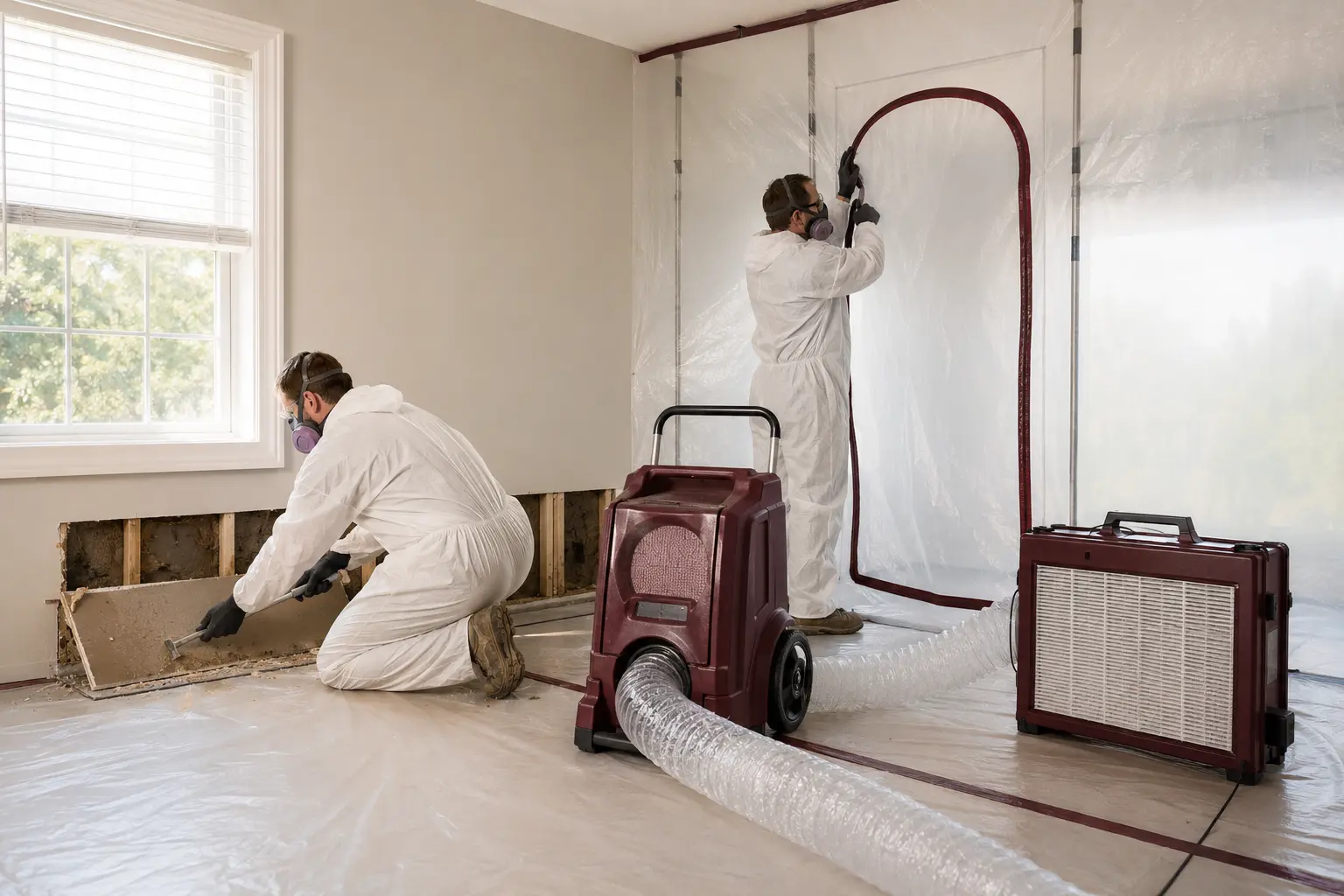
We isolate the work area using professional containment barriers. When appropriate, we use negative-air pressure and HEPA-filtered air scrubbers to help prevent airborne particles from spreading into unaffected areas.
Furniture, contents, flooring, HVAC openings, and nearby surfaces are protected as needed. Our technicians use appropriate personal protective equipment while working inside the contained area.
Porous materials that cannot be safely restored—such as contaminated drywall, insulation, carpet padding, or ceiling tiles—are carefully removed. Contaminated materials are sealed before being carried through the property.
Remaining structural materials and salvageable surfaces are cleaned using methods appropriate for the material and project conditions. This may include HEPA vacuuming, detailed surface cleaning, damp wiping, and approved remediation products.
Commercial dehumidifiers and air-moving equipment may be installed to dry the affected area. Moisture levels are monitored until the materials reach an acceptable drying condition.
We complete a detailed visual inspection and confirm that the remediation scope has been completed. When required, an independent environmental professional may perform post-remediation testing or clearance verification.
After remediation is complete, Hoosier Restorations can repair removed drywall, insulation, flooring, trim, paint, and other affected finishes—giving you one team from remediation through reconstruction.
Every mold project is different. The final scope depends on the moisture source, affected materials, size of the area, property conditions, and any testing or environmental protocols established for the project.
Central Indiana coverage
Explore local service information for our primary Central Indiana markets. Call to confirm current response availability for your property.
Review property restoration services, coverage details, and next steps for Indianapolis, Indiana.
Review property restoration services, coverage details, and next steps for Bloomington, Indiana.
Review property restoration services, coverage details, and next steps for Lafayette, Indiana.
Review property restoration services, coverage details, and next steps for Muncie, Indiana.
One accountable team
We explain the recommended scope, keep the work area organized, and communicate important changes as the project moves forward. When rebuilding is required, we can continue from mitigation into reconstruction.